

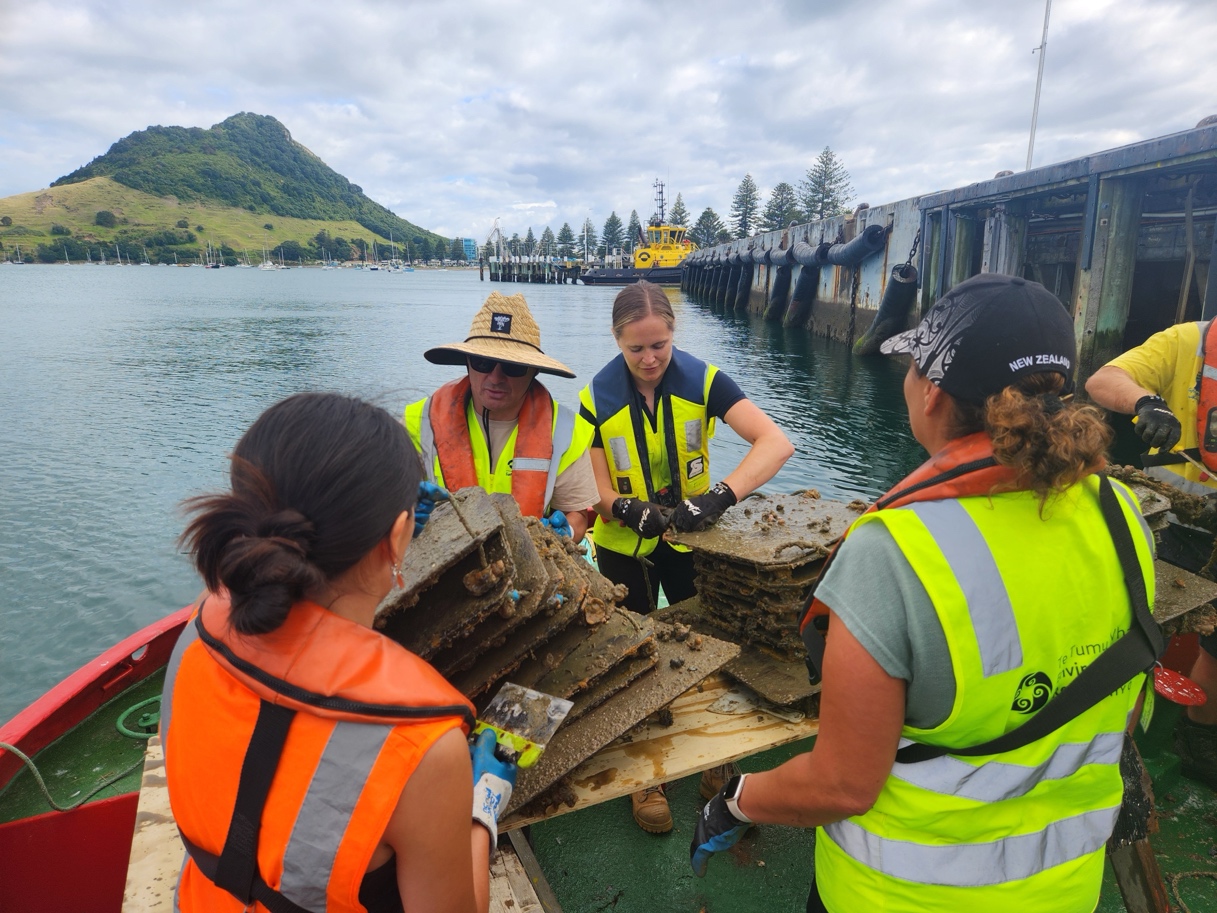
PhD student Kia Māia Ellis (Ngāi Te Rangi, Ngāti Ruanui) has always loved the ocean and is passionate about its health and vitality.
Based at Waikato University’s Coastal Marine Field Station at Sulphur Point, Kia Māia is working in partnership with Tauranga Moana Iwi Customary Fisheries Trust (TMICFT) to restore the harbour’s kōura population and strengthen its resilience in the face of climate change.
Her unique approach examines the interface of marine science and mātauranga Māori, customary knowledge and assesses how the results align with Maramataka (the Māori lunar calendar). Kia Māia says her iwi-driven doctoral study is the first known of its kind in Aotearoa.
“We’re exploring how pēpi kōura can be nurtured in captivity then returned to a protected mātaitai reserve area around Mauao, once they are big enough to better protect themselves.” – Kia Māia Ellis
“A core component of my thesis is a mātauranga Māori-based monitoring and restoration plan to activate Kaitiakitanga (guardianship) and support long-term recovery of kōura populations in Tauranga Moana.”
To better understand pēpi kōura settlement patterns, Kia Māia is monitoring crevice collectors at 12 sites throughout the harbour, including beneath Port of Tauranga’s wharf structures.
“Pēpi kōura take up to eight years to reach adulthood, and for their first two years they live offshore before settling into the harbour and coastline,” Kia Māia says.
“When developing their shells, they like to crawl up and hide in dark, quiet, protected spaces like beneath the port wharves, so we regularly check crevice collectors here to see what has settled.”
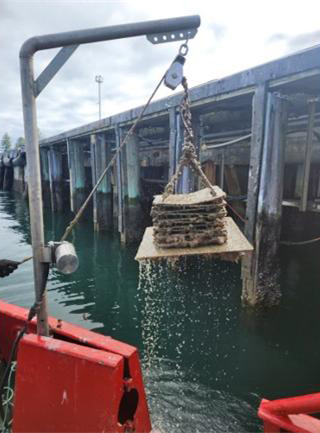
Port environmental advisor, Fenna Beets, accompanied Kia Māia and her team on their recent check of the crevice collectors under the port wharves. Three pēpi kōura were located and carefully transferred to the lab for on-growing.
Other marine creatures are often found during these monitoring visits, including octopus, seahorses, sponges, crabs, sea hares, triton shells, and sea cucumbers. All species are recorded (then returned safely to the water!) to gain a broader understanding of biodiversity and harbour health.
Kia Māia says her research findings are being integrated into practical management tools led by TMICFT, including rāhui, mātaitai (fisheries reserves) and working with Fisheries NZ to develop new bylaws.
“This mahi (work) is already having a direct impact by informing an iwi-led fisheries management framework, and we’re pleased the public has supported our tikanga-based rāhui on kōura, pāua, and mussels so far.”

